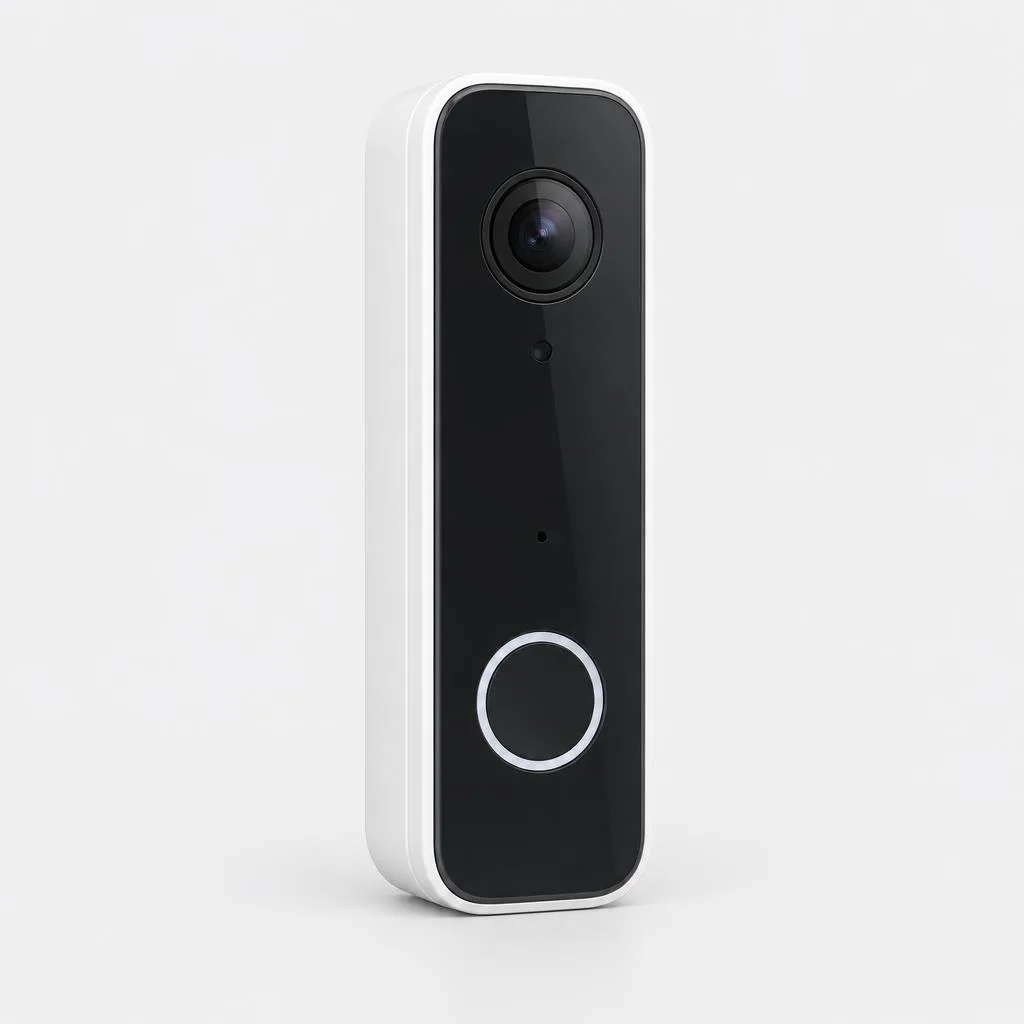
Smart security cameras and video doorbells sit at the intersection of wireless telecommunications regulation, supply-chain national-security rules, electrical and battery safety, and consumer privacy enforcement. For US importers, private-label brands, e-commerce resellers, and security installers, treating compliance as a single generic FCC/UL checkbox is a costly mistake: a camera that clears customs for consumer retail may still be disqualified from commercial or contractor projects under NDAA Section 889, or delisted by a major US marketplace over missing accredited power-adapter or battery test reports. This guide is an operational B2B sourcing framework and does not constitute legal advice or a guarantee of US customs clearance, regulatory approval, or channel onboarding.
Selection criteria by camera architecture and sales channel
Compliance obligations depend on hardware architecture and target buyer channel, so specify both before requesting supplier files.
- Radio and power architecture: Separate intentional wireless radiators (2.4/5 GHz Wi-Fi, Bluetooth LE onboarding, 4G LTE cellular) from wired-only Power over Ethernet (PoE) or coax cameras with no radio transmitter. Likewise, separate cameras powered by external plug-in AC/DC adapters, rechargeable lithium-ion battery or solar packs, 16-24 VAC doorbell transformers, and PoE switches.
- Ecosystem and local stream compatibility: Consumer retail channels prioritize Tuya Smart / Smart Life, Alexa, or Google Home voice-screen streaming, whereas commercial installers require local RTSP streams and ONVIF (Profile S, T, or G) interoperability with third-party Network Video Recorders (NVRs) without mandatory cloud lock-in.
Wireless equipment authorization and US supply-chain bans
- FCC Part 15 Certification vs SDoC (47 CFR Part 15): Any camera containing a Wi-Fi, Bluetooth LE, 4G LTE, or sub-GHz transmitter is an intentional radiator (47 CFR Part 15 Subpart C) and must hold an FCC Grant of Equipment Authorization (Certification) issued via an FCC-recognized Telecommunication Certification Body (TCB), with a valid FCC ID searchable in the FCC OET database (fcc.gov/oet/ea/fccid). Supplier's Declaration of Conformity (SDoC) applies only to unintentional radiators (such as wired-only PoE cameras without radio transmitters) and requires a designated US-based responsible party with US contact details under 47 CFR 2.909.
- Modular FCC ID vs host compliance: When a factory supplies an FCC ID covering only the internal Wi-Fi module, verify whether the modular grant allows host integration without additional radiative/SAR testing, whether co-located radios (Wi-Fi + BLE or LTE) transmit simultaneously, and whether Part 15 Subpart B digital emissions testing was completed on the finished camera.
- FCC Covered List and 47 CFR 2.911(d)(5) attestations: Under FCC Report and Order 22-84 and 47 CFR 2.903, equipment produced by entities on the FCC Covered List (fcc.gov/supplychain/coveredlist) is barred from receiving FCC equipment authorization. Every authorization filing requires signed written attestations under 47 CFR 2.911(d)(5)-(6) that the product is not covered equipment, plus a US Agent for Service of Process under 47 CFR 2.911(d)(7).
- NDAA Section 889 SoC screening: Separate from general consumer retail, Section 889 of the FY 2019 National Defense Authorization Act bars federal agencies, federal contractors, and grant/loan recipients from procuring or using video surveillance equipment—or critical components such as system-on-chip (SoC) processors—from designated entities (including Huawei/HiSilicon, ZTE, Hikvision, Dahua, and Hytera). Resellers supplying commercial, education, municipal, or contractor accounts must require a written main-SoC brand and part-number declaration.
Electrical safety vs channel rules: why UL is not a blanket statute
Do not assume either that US federal statute requires every product to carry a UL mark, or that low-voltage cameras need no safety documentation.
- Workplace NRTL rules vs retail marketplace policies: US federal law does not impose a universal statutory mandate that every consumer electronics product carry a UL mark. Instead, three mechanisms drive electrical safety requirements: (1) Under OSHA workplace rules (29 CFR 1910.303(b)(2) and 1910.399), electrical equipment used in US workplaces must be approved by an OSHA-recognized Nationally Recognized Testing Laboratory (NRTL at osha.gov/nrtl). UL Solutions is one NRTL alongside Intertek (ETL mark), CSA Group, SGS, TUV SUD, and Eurofins MET Labs. (2) Local building codes based on the National Electrical Code (NEC) require NRTL-listed Class 2 power supplies and plenum ratings (UL 2043) for air-handling spaces. (3) Major US online marketplaces and retail chains enforce commercial policies requiring ISO/IEC 17025 accredited lab reports or NRTL listing to UL 62368-1 (ICT/AV equipment), UL 1310 or UL 62368-1 plus US DOE 10 CFR Part 430 Level VI efficiency for external AC/DC adapters, and UL 1642 / UL 2054 plus a PHMSA 49 CFR 173.185 UN 38.3 Test Summary for lithium-ion battery cameras.
- Marketing claims vs compliance proof: Never treat seller spec tables as compliance evidence. Factories often provide a UL/ETL certificate covering only a plug-in power adapter while claiming the entire camera SKU is certified. Even in our published catalog of Wi-Fi security and smart-home listings, seller pages claim FCC/CE/RoHS while actual certificates remain unverified (status: Docs under review).
Privacy, cybersecurity, sample testing, and pre-order checks
- FTC enforcement and IoT security baselines: The US Federal Trade Commission (FTC), under Section 5 of the FTC Act and its Careful Connections IoT guidance, has pursued camera vendors over default passwords, unencrypted streams, and unsubstantiated encryption claims. California SB-327 (Cal. Civ. Code 1798.91.04) requires unique preprogrammed passwords or forced credential creation before first use, while NIST IR 8425 and the voluntary FCC U.S. Cyber Trust Mark define baseline controls for device identity, encrypted traffic, signed OTA updates, and vulnerability disclosure. Also verify cloud video storage residency, P2P relay ownership, and whether local SD/RTSP recording works if cloud services shut down.
- Sample audit and contract stop-points: Before ordering, verify the FCC ID internal photos against a physical PCB teardown (checking the main SoC and radio module markings), confirm forced password setup and TLS stream encryption, and run a 72-hour night-vision thermal test. Freeze the exact SoC, wireless module, adapter model, and firmware version in the purchase contract.
Catalog references and sourcing-desk CTA
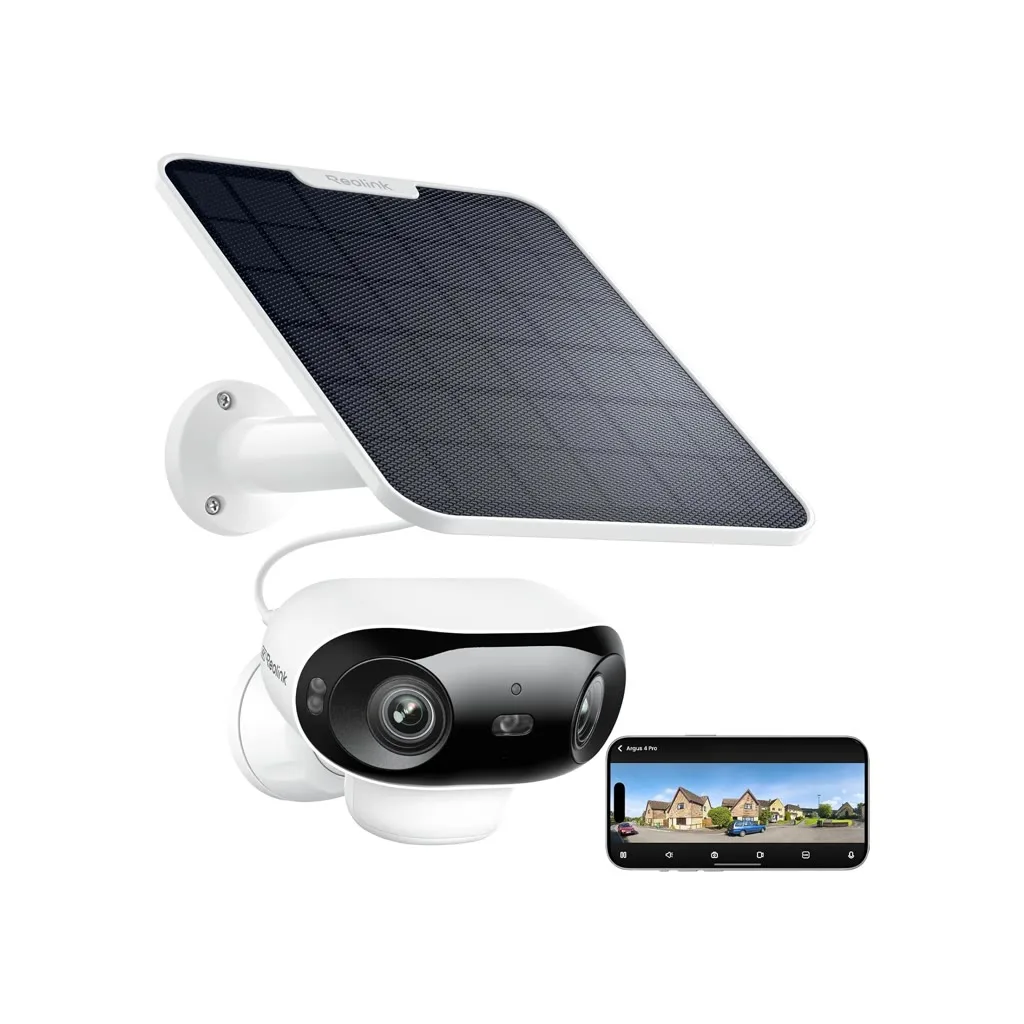
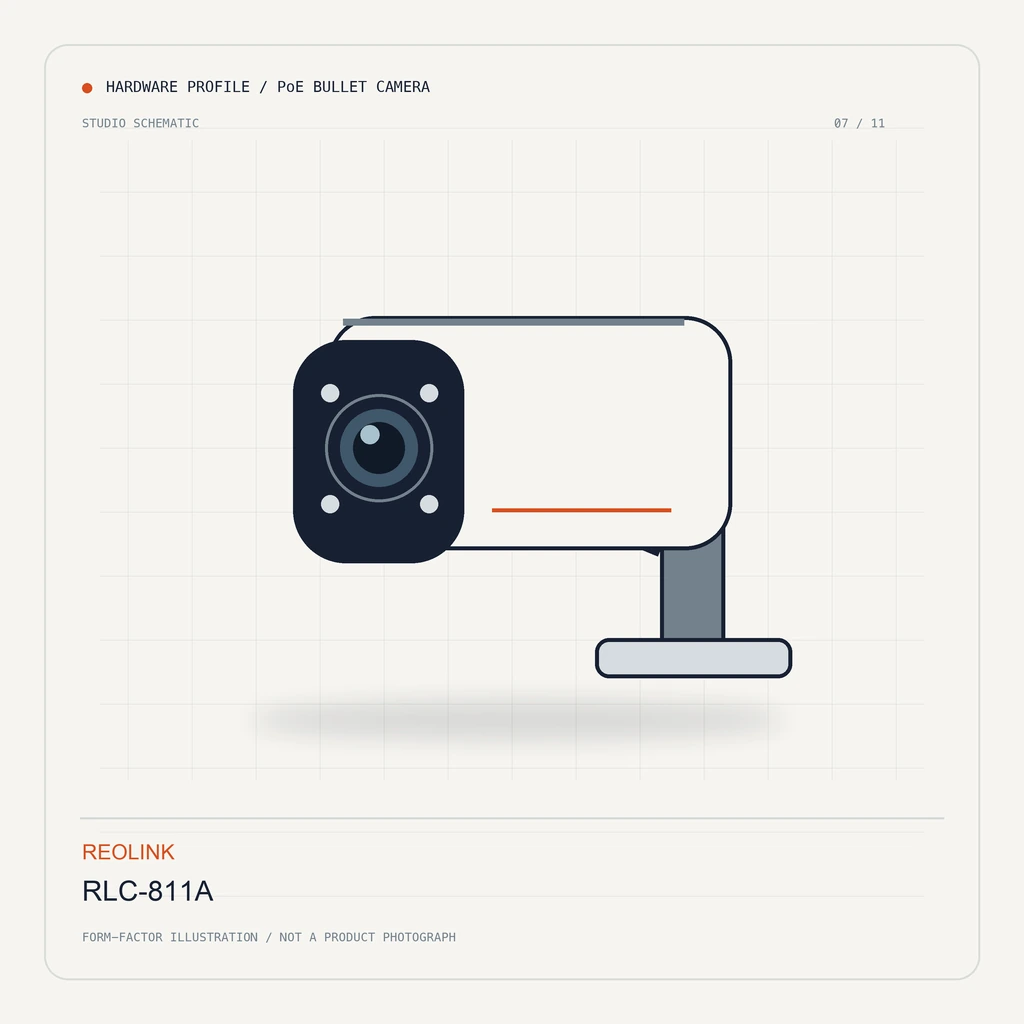
Compare two camera architectures in the linked catalog records. The Reolink Argus 4 Pro is a battery-powered Wi-Fi camera with a solar charging option. The Reolink RLC-811A uses wired Power over Ethernet. Match each sample to its model label and power arrangement before requesting the corresponding radio, electrical safety and privacy documentation. Planning a US security camera or video doorbell order? Use the AI product advisor or submit your target channel, power type, and compliance requirements through the sourcing desk inquiry form to request vetted supplier options and sample testing.