Short-Term Rental & Boutique Hotel Keyless Check-In Guide: Offline PIN Locks vs. Cloud Wi-Fi Bridges
An authoritative engineering and procurement playbook for property managers and boutique hoteliers evaluating algorithmically generated time-bound offline PIN codes versus always-on cloud Wi-Fi smart locks.
Architecture / Option
Pros
Failure Risk
Best B2B Fit
Algorithmic Offline PIN (Time-Hash)
Zero network reliance, 18-month battery life, instant check-in
Cannot revoke PIN remotely before scheduled window expires
Real-time remote unlocking, instant access revocation, live audit log
Wi-Fi dropout causes guest lockout; 3-month battery life drain
Urban boutique hotels with dedicated on-site reception and fiber LAN
Matter-over-Thread with Border Router
Low power consumption, local mesh resilience, Apple Home Key support
Requires Thread border router in every suite; higher deployment cost
Luxury serviced apartments, modern student housing, corporate suites
Hybrid Offline PIN + Local BLE Hub
Local PIN fallback during outages plus scheduled guest check-in automation
Keypad wear on frequent digits; bridge synchronization delay
Mid-scale hospitality portfolios with automated property management systems
Algorithmic Time-Bound PIN Architecture vs. Continuous Cloud Connectivity
Self-service guest arrival represents the most critical operational touchpoint across vacation rentals and boutique aparthotels. When an incoming guest arrives late at night, door access failures trigger customer support escalations, locksmith dispatches, and negative reviews. Traditional smart lock deployments rely on continuous 2.4 GHz Wi-Fi connectivity via local plug-in bridges. While cloud bridges allow operators to remotely trigger latch retraction, they introduce failure points: broadband dropouts, router crashes, or local power flickers can sever communication, leaving guest credentials stranded.
In contrast, algorithmic offline PIN architectures operate on synchronized cryptographic time-slice hashing principles. When an operator provisions an offline lock, a shared cryptographic secret key is stored in non-volatile memory. When a reservation is confirmed, the property management software server generates an access code using the identical secret key, target start timestamp, duration window, and door identifier. Because both the server and the lock onboard real-time clock run the identical algorithm, the keypad verifies the PIN purely offline without network communication.
Implementations like the Aqara Smart Lock U200 and Nuki Smart Lock Ultra combine local cryptographic verification with low-power mesh radios. Hardware engineers design real-time clock circuitry powered by low-leakage supercapacitors, ensuring accurate clock retention during battery replacements. Firmware incorporates a temporal tolerance window, allowing access fifteen minutes before scheduled check-in and after checkout. To evaluate door prep dimensions, operators can Request Quote through our enterprise sourcing desk.
Battery Chemistry Economics, Keypad Wear, and Escutcheon Hardware Standards
Battery life economics dictate operating expenses in hospitality operations. Standard smart deadbolts equipped with built-in Wi-Fi radios draw continuous background standby current between 50 and 120 microamperes, spiking to 150 milliamperes during transmission. In high-turnover rental units, standard alkaline AA batteries deplete within 60 to 90 days. Replacing batteries across fifty units four times per year generates substantial labor expense. Conversely, algorithmic offline keypad locks sleep at less than 15 microamperes, achieving 14 to 18 months of operational lifespan on primary lithium cells under standard hospitality duty cycles.
Physical keypad durability and escutcheon construction represent secondary critical engineering considerations:
Keypad touch surfaces: Capacitive glass panels present a clean aesthetic but suffer from visible finger grease trails. Advanced commercial models incorporate randomized phantom decoy digits that illuminate prior to entering the real code, scrambling fingerprint residue.
Mechanical tactile pushbuttons: Physical silicone or metal pushbuttons offer tactile feedback for elderly guests and perform reliably in freezing rain where capacitive surfaces struggle with wet finger input.
ANSI and BHMA certification: Commercial properties must specify Grade 1 or Grade 2 certified deadbolt assemblies, withstanding at least 400,000 continuous bolt cycles to prevent forced entry.
Channel PMS Integration: Guesty, Hostaway, and Cloudbeds API Workflows
Automating credential generation requires seamless integration between property management systems (PMS) and lock platforms. Leading hospitality channels including Guesty, Hostaway, Track, and Cloudbeds utilize automated webhook event listeners triggered upon guest booking confirmation:
Booking confirmation: PMS webhooks dispatch booking metadata—including guest phone number, check-in timestamp, and checkout timestamp—to the access management API.
Dynamic PIN generation: Management software computes the time-bound algorithmic PIN corresponding to the designated unit lock without requiring physical network contact with the door lock.
Scheduled guest communication: Exactly 24 hours prior to arrival, the automated messaging sequence dispatches the digital check-in guide via SMS and email with building entry directions.
Emergency physical jump-start: Commercial locks feature external 9V battery jump terminals or a sealed USB-C power port on the bottom exterior escutcheon to prevent lockouts during dead battery scenarios.
Property managers can review multi-unit hardware schedules and bulk deployment timelines by submitting an inquiry to Request Quote directly with our technical team.
Frequently Asked Questions
How do algorithmic offline PIN locks work without an internet connection?
Algorithmic offline PIN locks utilize synchronized cryptographic hashing formulas and an internal high-precision real-time clock to evaluate entered credentials. Because the lock non-volatile memory and cloud server share an identical secret seed key, both systems compute the exact same valid numeric sequence for any designated date and time window without requiring wireless communication.
What happens if a guest extends their stay when using an offline PIN lock?
When a guest extends their booking, the property operator uses their management dashboard to compute a second time-bound PIN corresponding to the extended reservation window. The guest receives the new code via SMS or messaging app, which becomes active immediately upon the expiration of their original check-in PIN.
How do property operators handle clock drift on offline locks?
High-grade offline commercial locks incorporate temperature-compensated crystal oscillators that maintain time accuracy within a few minutes per year. Additionally, the algorithmic verification logic includes an automatic temporal buffer window of fifteen to thirty minutes, and the onboard clock synchronizes whenever housekeeping staff connect via Bluetooth Low Energy during room turnover.
Can an offline lock prevent former guests from reusing check-in codes?
Yes, offline algorithmic codes expire automatically the instant the programmed checkout timestamp elapses on the lock internal clock. Once the designated checkout hour passes, the internal mathematical verification algorithm permanently rejects that specific numeric sequence, preventing former guests or unauthorized visitors from regaining room entry.
Why do cloud Wi-Fi locks drain batteries significantly faster than offline keypad locks?
Continuous 2.4 GHz Wi-Fi transceivers require high baseline standby current to maintain active network handshakes with local wireless routers. In contrast, offline algorithmic keypad locks keep their wireless radios in deep microampere sleep mode, drawing electrical current only during the momentary seconds when a guest physically touches the keypad to enter their PIN.
Export a structured pre-PO procurement checklist extracted from this playbook's verification sections, buyer diligence questions, and referenced catalog SKUs.
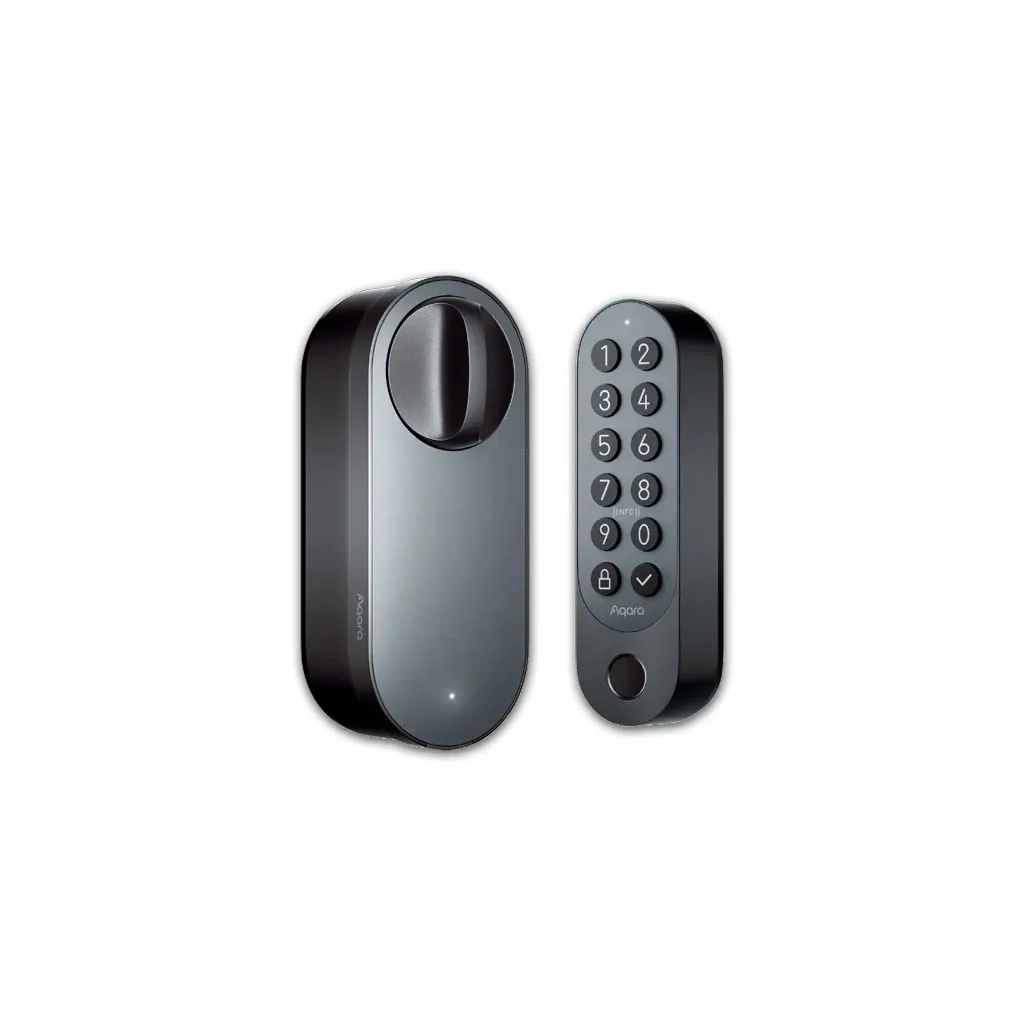
Retrofit smart lock that fits over an existing cylinder without drilling, with fingerprint, Apple Home Key, NFC, keypad, and app unlocking, Matter over Thread, a rechargeable Li-ion battery lasting up to 6 months, and an IPX5-rated keypad for outdoor use.
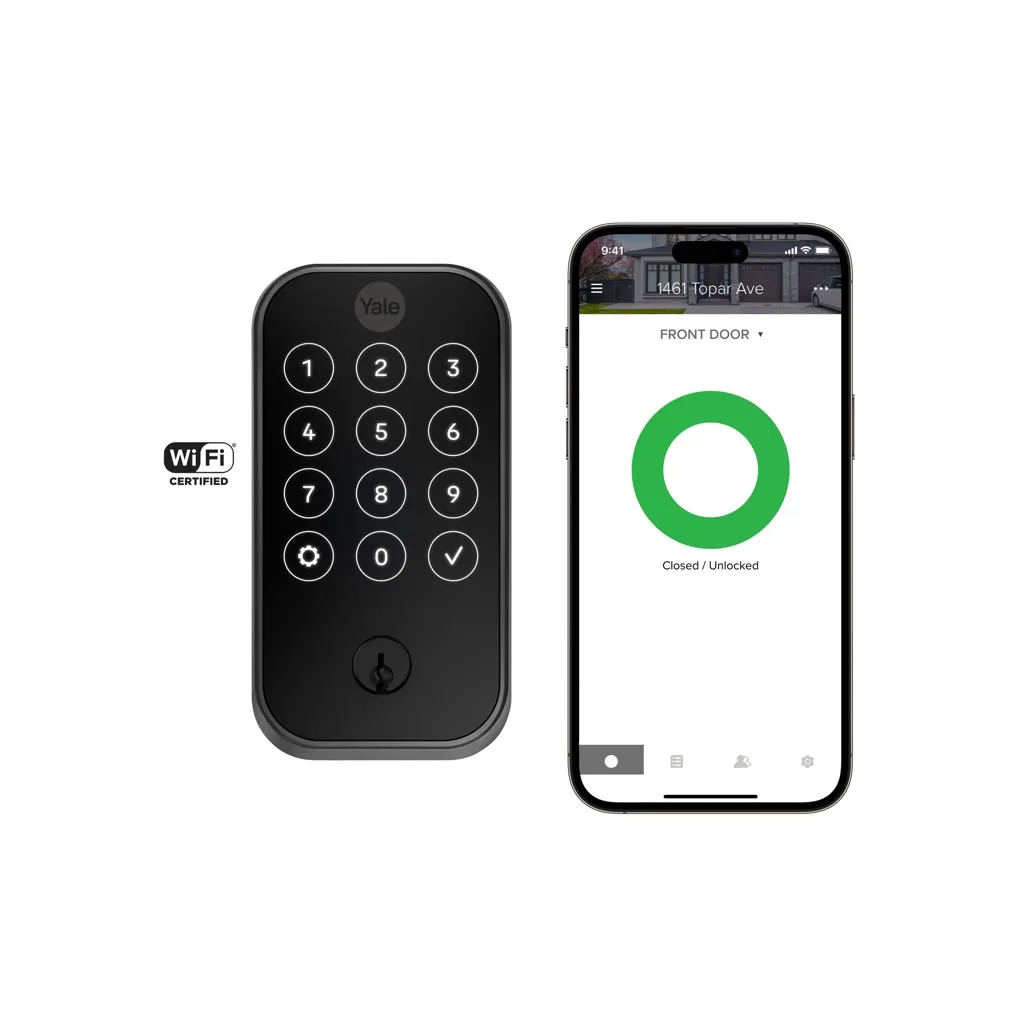
Key-free touchscreen Wi-Fi deadbolt with unlimited shareable entry codes, Auto-Lock with DoorSense, Auto-Unlock, and remote lock control through the Yale Access app; built-in Wi-Fi with Bluetooth, works with Apple Home, Alexa, and Google Assistant, and replaces standard US deadbolts with a screwdriver.
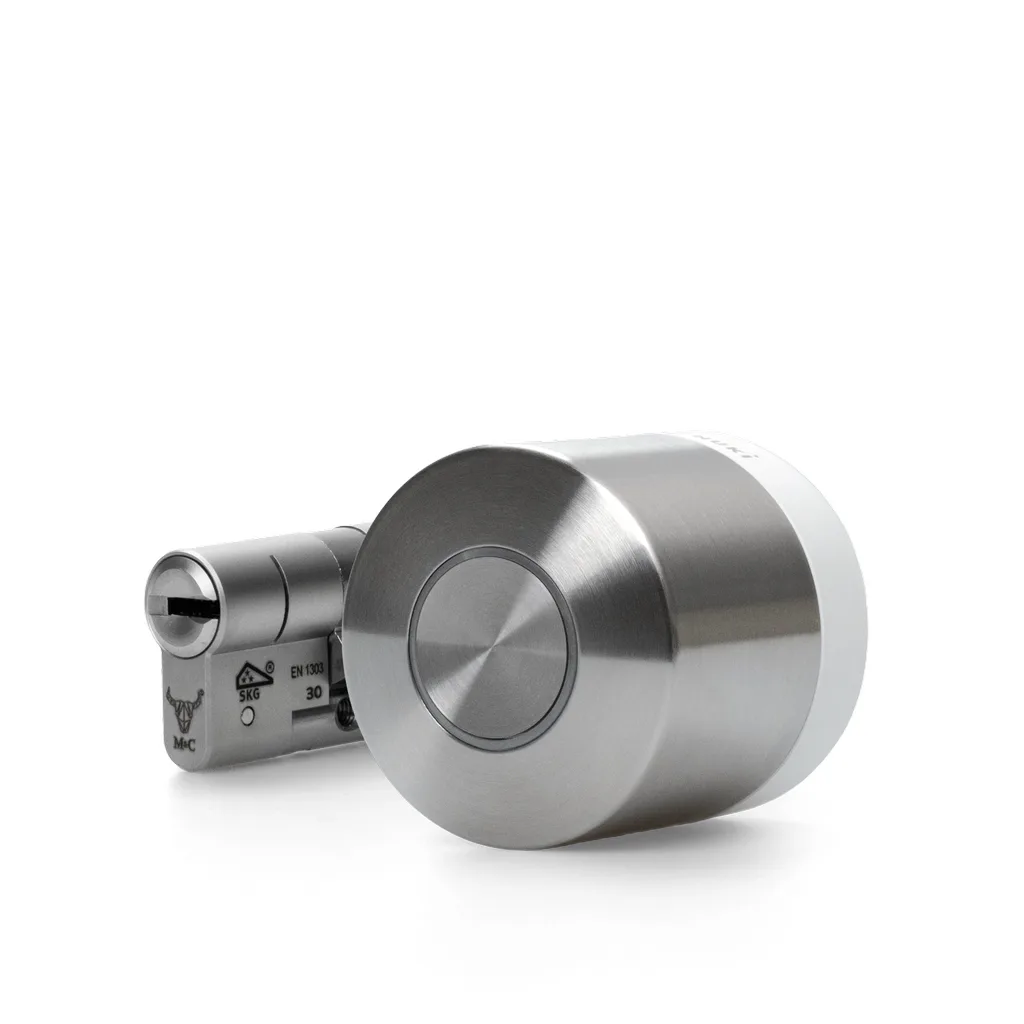
First Nuki with a brushless motor, locking up to 3.4x faster than previous generations with three speed modes (Insane 3.4x, Standard 2.6x, Gentle 1.5x); built-in Wi-Fi and Matter over Thread with a rechargeable Li-polymer battery in a 57 mm body, so no bridge is required. Connectivity & power: Built-in Wi-Fi, Matter over Thread, Bluetooth; rechargeable built-in Li-polymer battery (about 2-hour recharge) Traction: 5th-generation Nuki flagship, launched December 2024; AV-TEST certified as a secure smart home product in 2025; smallest Nuki ever at 57 x 58 mm; SKG***-certified Universal Cylinder included in the box
Retrofit actuator that clamps over the existing thumbturn with no drilling, fitting US deadbolts, Euro cylinders, UK oval and Swiss round cylinders, including some mortise locks; a strong motor copes with misaligned doors; up to 15 unlock methods with the optional Keypad Touch. Connectivity & power: Bluetooth LE built-in; Matter via SwitchBot Hub 2 or Hub Mini Matter Enabled (sold separately); 'Matter Enabled' SKU runs Matter over Wi-Fi natively; 4x AA batteries, 6-9 months (or dual rechargeable battery packs) Traction: SlashGear rated 9/10 and called it the best-value retrofit lock; 4.4/5 from 2,800 Amazon ratings (lettherobot.com, 2026); named best-value retrofit pick in multiple 2026 smart-lock roundups; Works With Home Assistant certified via Matter
First smart lock with 3D facial recognition: binocular structured-light with liveness detection unlocks in under 1.5 seconds for up to 100 faces at about 1 m range, with radar approach detection; paired with a 3D fingerprint sensor (0.2 s, AI learning) and Apple Home Key. Connectivity & power: Built-in Wi-Fi, Bluetooth; 2 rechargeable batteries included Traction: CES 2024 debut; first smart lock with 3D facial recognition; 4.2 stars from 2,800 reviews (smartlabreviews, 2026); award-winning design