Edge AI and companion hardware sourcing for B2B buyers evaluating NPU performance, thermals and export compliance
Benchmark the camera-to-result path under sustained heat, qualify the production replacement and screen the exact configuration for export before promising delivery.
Identify which component runs the model
Sketch the path from an event in the scene to the action the user sees. A camera may return frames, detections or both. A pair of glasses may display a prompt produced on a phone. A companion product may have a useful behavior with no documented customer-deployable model interface. Specify what the buyer needs to modify, the output it must receive and the data allowed to cross each connection.
Candidate
Documented processing or interface
Decision for the buyer
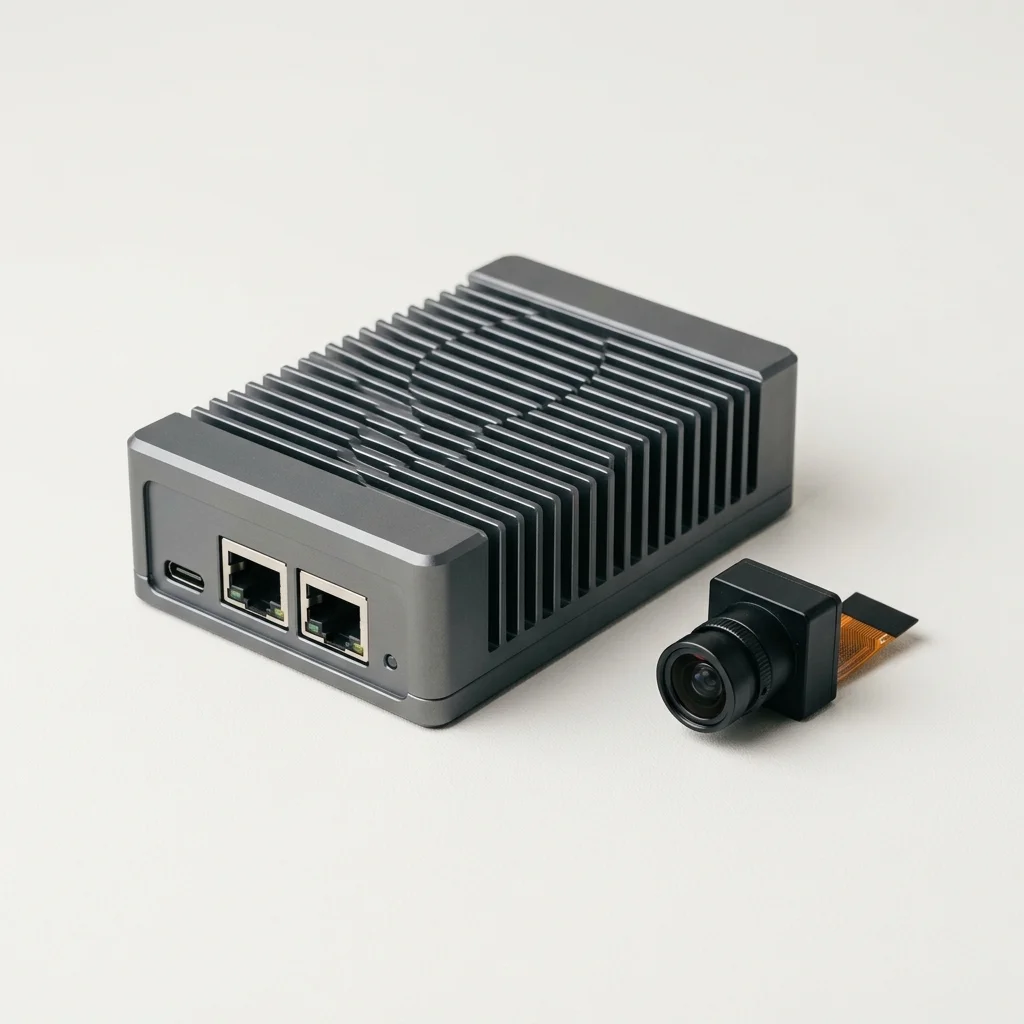
NVIDIA Jetson Orin Nano Super Developer Kit
8 GB module and reference carrier, rated up to 67 sparse INT8 TOPS
Run the intended model within sustained memory and power limits
Raspberry Pi AI Camera
Sony IMX500 runs a compatible network on the sensor
Confirm conversion and metadata for the actual network
Raspberry Pi AI Kit
Pi 5 HAT and removable 13 TOPS Hailo-8L module
Reserve known stock for existing builds or qualify a successor
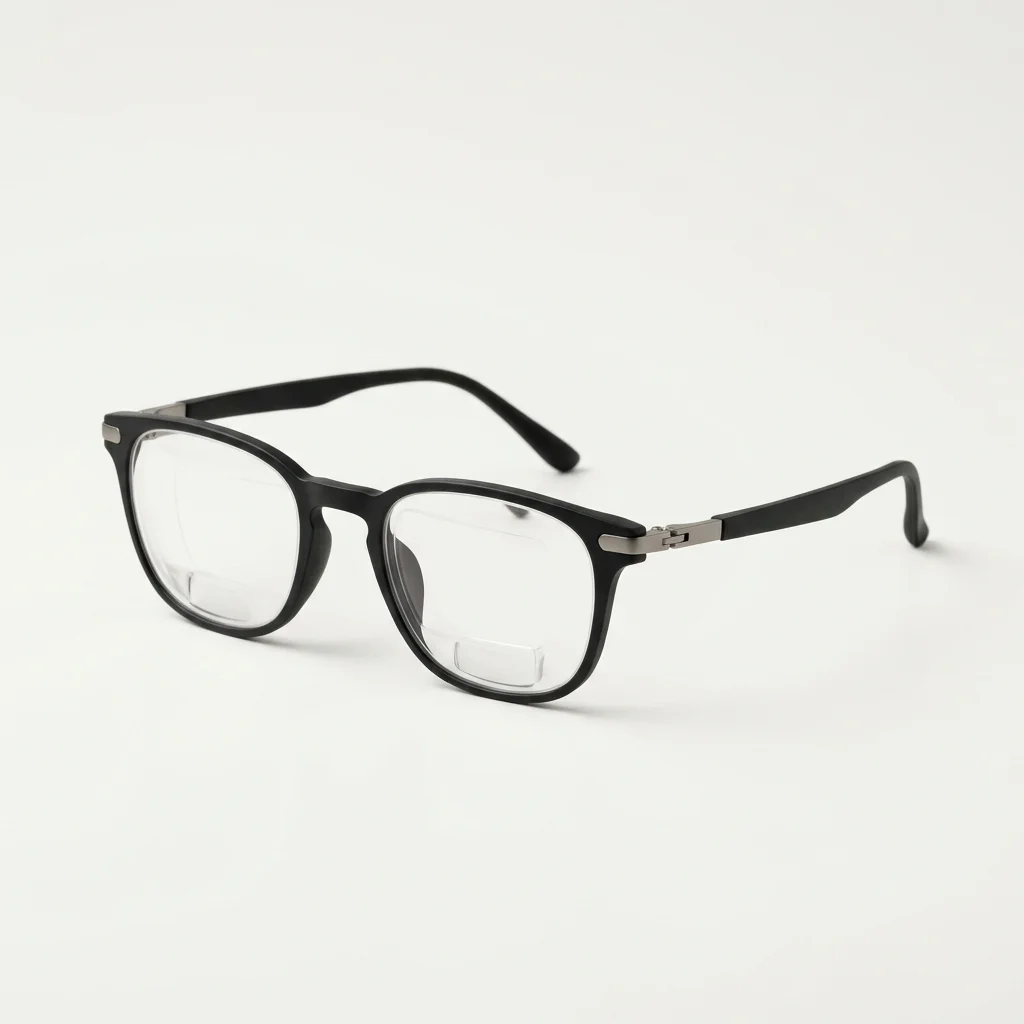
Vuzix Z100
Paired mobile device supplies prompts through the Ultralite SDK
Verify host support, replacement units and service life
Brilliant Labs Frame
Programmable camera, microphone and display communicate with a Bluetooth host
Specify the host application and where inference occurs
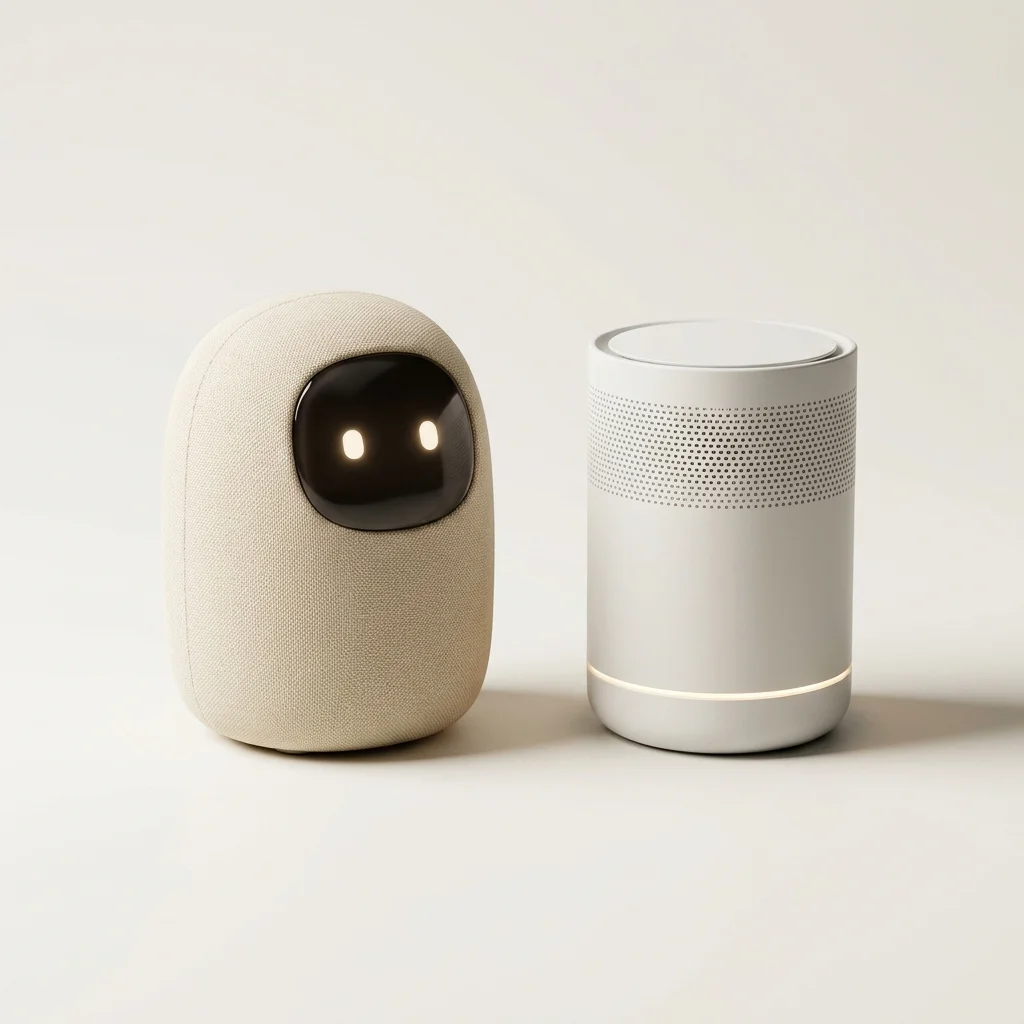
Casio Moflin
Touch and familiar voices elicit behavior and sounds
Evaluate a companion interaction under normal room conditions
Ultrahuman Home
Ambient measurements feed app-based environment and sleep insights
Verify the intended nonclinical use and access to results
The Jetson rating describes selected integer operations with sparsity. The Hailo neural processing unit (NPU) has a different architecture and workload assumptions. Dividing one headline by the other does not predict how many cameras a finished system can serve. Define the model, precision, input shape, camera count and required outputs first. Ask each supplier to identify unsupported operations and any copies or conversions that run on the host. NVIDIA kit guideRaspberry Pi camera workflow
Benchmark the complete camera-to-action path
Use the same set of consented or purpose-made scenes across candidates, including low light, motion and empty frames. Keep separate material for tuning and evaluation. Tag the ground truth before running trials so an enthusiastic engineer cannot silently discard difficult cases. Measure misses and false alarms at the operating threshold that will be used in the field. A faster detector can still increase the review workload if it produces a queue of false alarms.
Timestamp capture, preprocessing, inference, postprocessing and delivery of the result. Report median and 95th percentile end-to-end latency, the number of frames arriving and the number actually processed. Test both steady arrivals and the burst your application must handle. A system that discards late frames can look fast if the report includes only completed requests. Preserve the dropped-frame count and clock synchronization method beside the latency results.
For the IMX500, first convert the real network with the supported tools and verify output interpretation on the host. Then log whether the application transmits images as well as detections. On-sensor inference can reduce the data needed by the application. Privacy depends on what the host records, keeps or forwards. Where the buyer permits only metadata, demonstrate that behavior with the intended configuration and check the maintenance and diagnostic modes as well.
Repeat the test after the enclosure warms up
Fit the intended carrier, power supply, storage, enclosure, cooling assembly and camera cabling. Measure power at the system input and record the ambient temperature near the intake. Run until temperatures and clocks stabilize, then repeat the busy sequence while logging latency and memory use. Compare cold and warm results at the same accuracy threshold. Choose the sustained operating point with enough margin for the documented ambient range and routine servicing.
Have the installer reproduce the sample from a clean image. Record board revision, runtime, model checksum, compiler settings and any calibration data. Check boot-to-ready time after an ordinary service restart. Rehearse recovery using a spare and the installer instructions. A demonstration that depends on an engineer's personal laptop or a download no longer available in the destination creates an ongoing maintenance cost.
NVIDIA supplies the kit for development use. Obtain a separate production bill of materials, availability horizon and warranty for the deployable assembly. Production of the original Hailo-8L AI Kit has ended. Raspberry Pi directs new designs to its AI HAT family. Treat a change of accelerator as a new compilation, thermal and accuracy qualification. Vuzix lists the Z100 with its legacy devices, so confirm stock, SDK support and a replacement path in writing. Raspberry Pi lifecycle noticeVuzix support status
Screen export, power and end use before releasing the order
Ask the exporter for the jurisdiction and classification of the exact board, module, bundled software and any controlled technology supplied. Where US export rules apply, request the ECCN or documented basis for EAR99, then screen destination, end user, intermediaries, intended use and any reexport. Have the responsible compliance team decide license requirements against the rules in force on the transaction date. A TOPS figure, retail availability or a customs tariff code cannot settle that determination. Keep the decision with the purchase order. BIS reexport guidance
For Mexico, check applicable NOM electrical requirements and verify telecom homologation with the current CRT register, including any legacy IFT or IFETEL paperwork. In Brazil, confirm Anatel homologation for in-scope radio equipment and check Inmetro scope for electrical items. Verify the local voltage at the installation, including 127 V versus 220 V sites in Brazil, and check the adapter nameplate. Where a wearable travels with lithium-ion spares, have the forwarder classify the installed and spare packs separately and obtain the UN 38.3 evidence. Mexican equipment registerBrazilian telecom certification process
Frequently Asked Questions
Which benchmark belongs in the acceptance contract?
Set a maximum end-to-end delay at the agreed percentile, a minimum acceptable accuracy, a permitted frame loss and the enclosure temperature range. Record the dataset version and stream count. A reviewer should be able to reproduce the result using the shipped software image.
Does a programmable headset run every model on the glasses?
Frame allows a host to request an image, run a model and send a result back. The Z100 displays prompts from a paired mobile device. Budget for the host, radio link and application support, then test what the worker sees if that link drops.
Can buyers specify Moflin as a conversational assistant?
Moflin responds to interactions with movement and sound and can learn voice characteristics. It does not conduct a spoken conversation. Define success in terms of observable companion behavior. Likewise, scope Ultrahuman Home as an environment monitor and use a separately qualified instrument for clinical or regulatory measurements.
Can a successful pilot justify buying remaining Hailo kits?
It can support a bounded spare purchase for a maintained installation. Count the installed units, expected service period and available replacement stock. For expansion, obtain the intended successor and repeat the measured workload before promising customers an equivalent installation.
How should prototype and production quotations differ?
Confirm volume FOB and MOQ through a written RFQ for the production assembly and named port. Separate carrier, thermal solution, adapter, integration, software support and compliance work from the sample kit. Require notification and requalification terms for changes to the accelerator or enclosure.
Export a structured pre-PO procurement checklist extracted from this playbook's verification sections, buyer diligence questions, and referenced catalog SKUs.
An 8 GB Orin Nano module and reference carrier board let developers benchmark local vision and language models. NVIDIA rates the kit at up to 67 sparse INT8 TOPS in Super mode.
A 12.3-megapixel Sony IMX500 runs a compatible neural network on the image sensor. The Raspberry Pi host can read inference results alongside frames through its camera software.
This original Pi 5 kit combines an M.2 HAT+ and a removable 13 TOPS Hailo-8L inference module. Raspberry Pi has ended production and retains the documentation for existing installations.
A lightweight waveguide display puts short prompts from a paired mobile device in a worker's line of sight. The Ultralite SDK lets a team build the phone-side workflow.
Frame exposes a camera, microphone and near-eye display to Lua programs. A Bluetooth host can request an image, run a vision model and return a short result to the display.
A soft companion responds to touch and familiar voices with movements and sounds. Its behavior changes with repeated interactions, and the MofLife app can show a journal of those interactions.
Home measures room conditions including air quality, light and noise. Its app relates those measurements to sleep-environment trends so a user can review changes over time.