4G LTE & Global eSIM Smart Hardware Buyer Guide: Carrier Roaming Economics, IMEI Rules & Off-Grid Solar Sizing
An engineering and commercial buyer guide for deploying cellular IoT security cameras, GPS asset trackers, and remote monitors with multi-carrier eSIM profiles, PTCRB approvals, and solar energy budgets.
Architecture / Option
Pros
Failure Risk
Best B2B Fit
Multi-Carrier Global eUICC (eSIM)
Remote over-the-air profile switching, single SKU worldwide distribution
Full 1080p/2K smooth live streaming, rapid cloud pan-tilt-zoom control
Consumes up to 5W continuously; requires 30W-60W solar panel arrays
Active infrastructure construction sites, critical asset storage yards
Cellular Modems: LTE Cat-1 bis vs. Cat-4 and the Permanent Roaming Trap
Securing remote construction yards and agricultural perimeters requires off-grid cellular hardware balancing power draw, hardware cost, and data throughput:
LTE Cat-1 bis: Cat-1 bis operates on a single antenna design, reducing physical RF layout complexity and transceiver component costs. It delivers peak downlink speeds of 10 Mbps and uplink speeds of 5 Mbps, consuming less than 15 microamperes in deep power-saving mode. For motion-activated cameras that transmit short event clips, Cat-1 bis provides an ideal energy-to-throughput ratio.
LTE Cat-4: Cat-4 incorporates dual-antenna receiver diversity (MIMO), achieving downlink throughput up to 150 Mbps and uplink up to 50 Mbps. Cat-4 is required for 2K live streaming, remote pan-tilt-zoom telemetry control, and real-time audio talkback. However, active Cat-4 transceivers consume up to 4.0 watts during transmission, requiring larger battery reserves and solar panel surface areas.
The most severe commercial pitfall in global IoT deployment is the permanent roaming trap, where host carriers disconnect guest roaming SIMs active beyond 90 days. Enterprise buyers must specify hardware featuring embedded universal integrated circuit cards (eUICC / eSIM) supporting GSMA SGP.32 Remote SIM Provisioning to activate native local carrier profiles over the air.
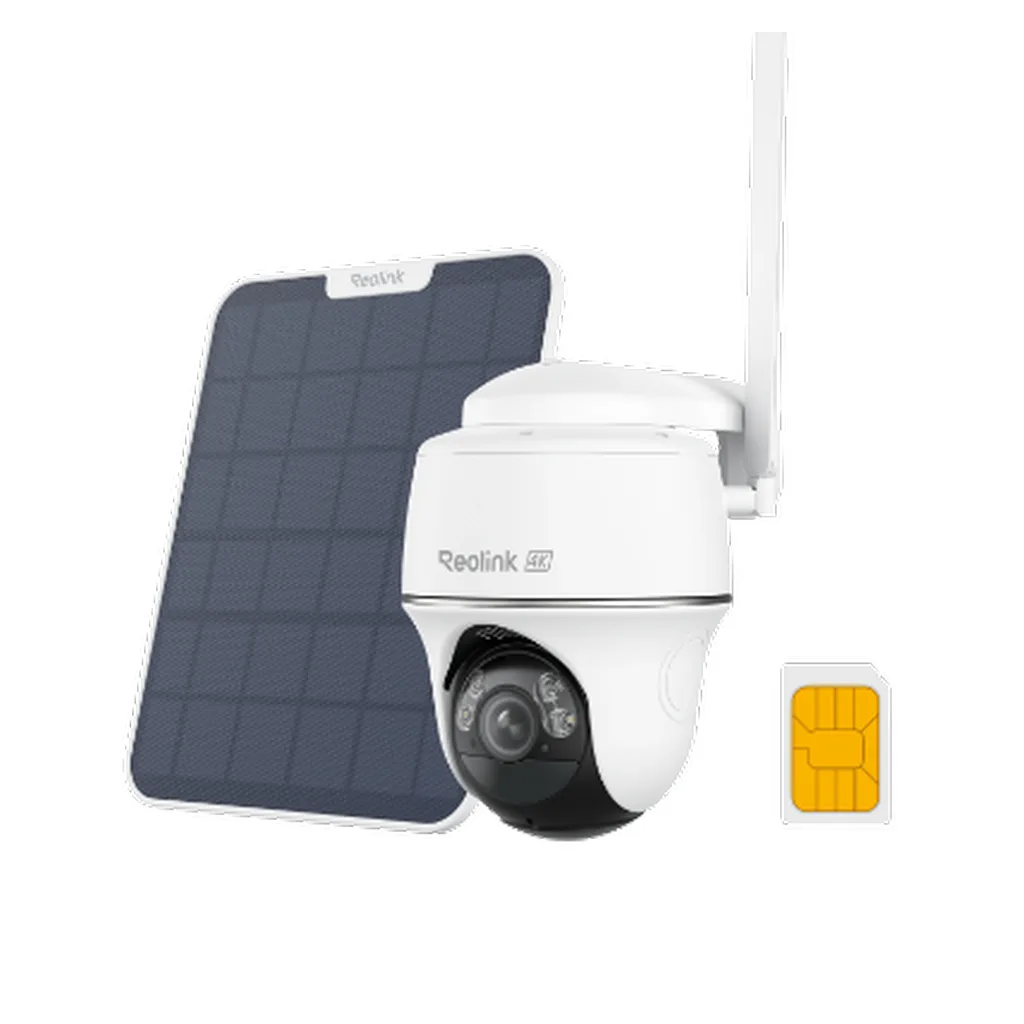
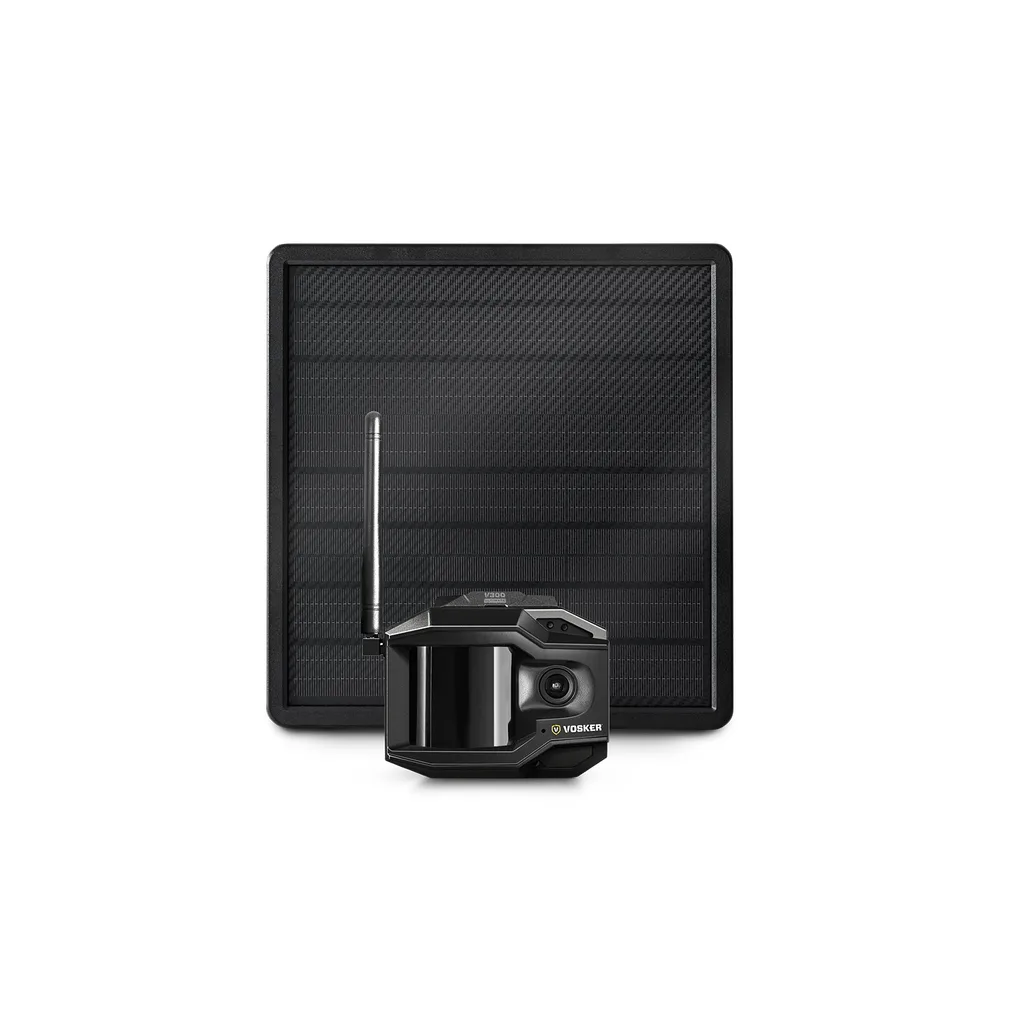
Flagship remote surveillance units such as the Reolink Go PT Ultra and the rugged Vosker V300 Ultimate offer specialized off-grid cellular configurations. Commercial integrators planning multi-site deployments can Request Quote through our network architecture team.
Mandatory Carrier Certification: PTCRB, GCF, and IMEI Whitelisting
Standard FCC Part 15 or CE-RED certifications do not guarantee cellular network access. National carriers enforce mandatory compliance gates:
PTCRB and GCF approvals: In North America, the PCS Type Certification Review Board (PTCRB) mandates exhaustive RF performance, spurious emission, and antenna over-the-air testing across operational frequency bands. In Europe and Asia, the Global Certification Forum (GCF) enforces equivalent standards. Deploying non-certified devices violates carrier terms and risks equipment disconnection.
Carrier device whitelisting: Tier-1 carriers maintain proprietary database whitelists indexed by the device International Mobile Equipment Identity (IMEI) Type Allocation Code (TAC). When an unauthorized device attempts a tower handshake, the carrier network interrogates the TAC. If the model is not certified on that specific carrier network, the tower blocks connection attachment.
Antenna RF tuning: Off-grid metal enclosures and solar brackets detune omnidirectional whip antennas. Hardware engineers must verify that the antenna voltage standing wave ratio (VSWR) remains below 2.5:1 across critical low-frequency bands (such as B12, B13, B14, B20, and B71) to ensure connection stability in fringe coverage areas.
Off-Grid Solar Sizing, Battery Chemistry, and Power Management Algorithms
Under-sizing solar panels and battery storage causes frequent winter outages when northern peak sun hours drop to 1.5 hours daily:
Daily electrical consumption: A cellular camera drawing standby current of 5 milliamperes at 3.7 volts, plus twenty daily 30-second 4G video transmission events drawing 800 milliamperes, consumes approximately 450 to 600 milliampere-hours per 24-hour cycle.
Solar panel wattage calculation: To harvest adequate power during winter days offering only 1.5 effective sun hours, factoring system efficiency losses across panel angle and charge controller overhead, specifying 15-watt to 30-watt monocrystalline solar panels provides the necessary safety margin to recharge depleted cells during winter sunny intervals.
Battery chemistry selection: Conventional nickel-manganese-cobalt lithium-ion batteries cannot be safely charged when internal cell temperatures drop below 0 degrees Celsius; forcing charge current into freezing cells causes metallic lithium plating and permanent capacity loss. Commercial off-grid equipment must utilize lithium iron phosphate (LiFePO4) chemistry paired with integrated low-temperature charge cutoff circuitry.
Auxiliary asset tracking devices like the Pebblebee Clip 5 illustrate efficient low-power operational design. For site-specific solar irradiance analysis and bulk hardware scheduling, procurement officers can Request Quote today.
Frequently Asked Questions
What is the permanent roaming rule and how does it impact cellular IoT devices?
The permanent roaming rule is a carrier restriction enforced by national network operators that limits foreign SIM cards from operating on their cellular infrastructure for more than 60 to 90 consecutive days. If an off-grid IoT camera uses a roaming SIM permanently, the host carrier will blacklist the IMEI, causing immediate data disconnection.
Why is PTCRB certification necessary for cellular smart hardware in North America?
PTCRB certification ensures that a cellular device complies with strict network interoperability, radio frequency emission, and antenna efficiency standards required by major telecom operators. Cellular carriers automatically reject non-PTCRB certified devices from registering on their wireless networks.
How do LTE Cat-1 bis and LTE Cat-4 modules compare for remote security cameras?
LTE Cat-1 bis utilizes a single antenna, achieves up to 10 Mbps downlink, and draws minimal power, making it ideal for battery and solar-powered motion cameras transmitting short video clips. LTE Cat-4 uses dual antennas, achieves up to 150 Mbps downlink, and supports smooth 2K live streaming, but consumes significantly more electrical power.
How should buyers size solar panels for off-grid 4G security cameras during winter?
Buyers must calculate worst-case winter solar irradiance (typically 1.5 peak sun hours daily in northern regions) and multiply daily device watt-hour consumption by a 3x safety factor. Commercial cameras generally require a minimum of 15W to 25W monocrystalline solar panels to maintain battery charge during extended overcast winter periods.
Why does cold weather prevent standard lithium batteries from charging via solar panels?
Standard lithium-ion battery chemistry suffers from severe lithium plating when subjected to charging currents at temperatures below freezing (0C / 32F). This causes permanent cell degradation and fire hazards. Commercial off-grid hardware must incorporate low-temperature charge inhibit sensors or specialized LiFePO4 batteries with heating elements.
Export a structured pre-PO procurement checklist extracted from this playbook's verification sections, buyer diligence questions, and referenced catalog SKUs.
4K 8MP pan-tilt camera (355-degree pan, 140-degree tilt) on 4G LTE with PIR plus person/vehicle/animal detection, built for fully off-grid sites such as farms, construction and remote properties, with a 21.6 Wh battery and optional solar panel. Connectivity & power: 4G LTE (includes activated SIM with 100 MB free data); 21.6 Wh non-removable battery; Solar Panel 2 (6 W) sold separately USD 29.99-39.99; microSD local storage Traction: securitycamlab Best cellular security camera 2026 overall pick; homegearlab 2026-10-19 lists camera+SIM at USD 199.99
Off-grid 4G LTE security camera with a 15,000 mAh external solar power bank plus a 14,000 mAh internal battery, live streaming and motion-activated recording, designed for farms, cabins and construction sites with no power or Wi-Fi. Connectivity & power: 4G LTE with preactivated SIM; 15,000 mAh external solar power bank + 14,000 mAh internal battery; SD card storage; IP65 Traction: 4.5 stars (118 reviews) at RONA Canada; sold at Tractor Supply Co (USD 399.99) and Amazon.ca; 6-12 months autonomy claimed by the manufacturer
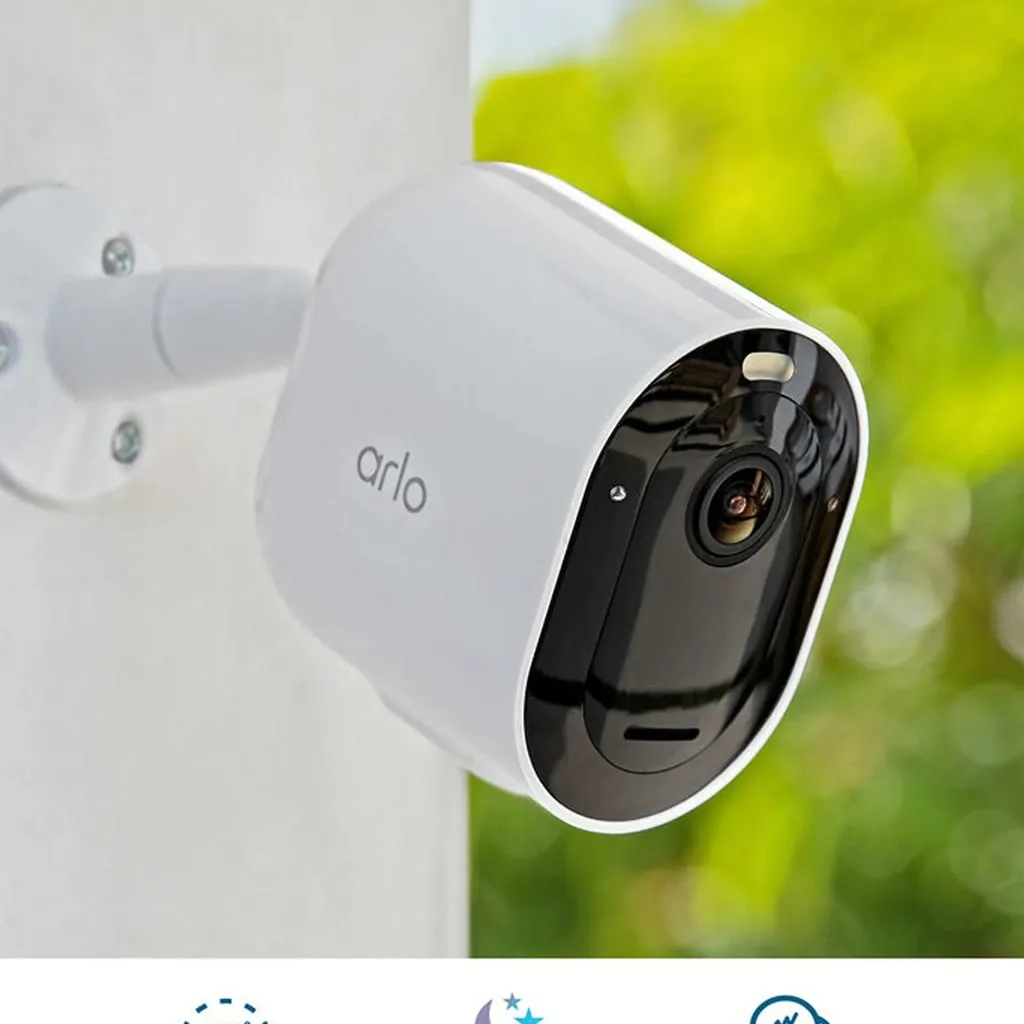
Wire-free 2K HDR spotlight camera with a 160 degree field of view, 12x zoom, color night vision, an integrated spotlight and siren, and two-way audio. It connects over dual-band Wi-Fi with no hub required, works with Alexa, Google Assistant, and Apple Home, and includes a 30-day Arlo Secure trial.
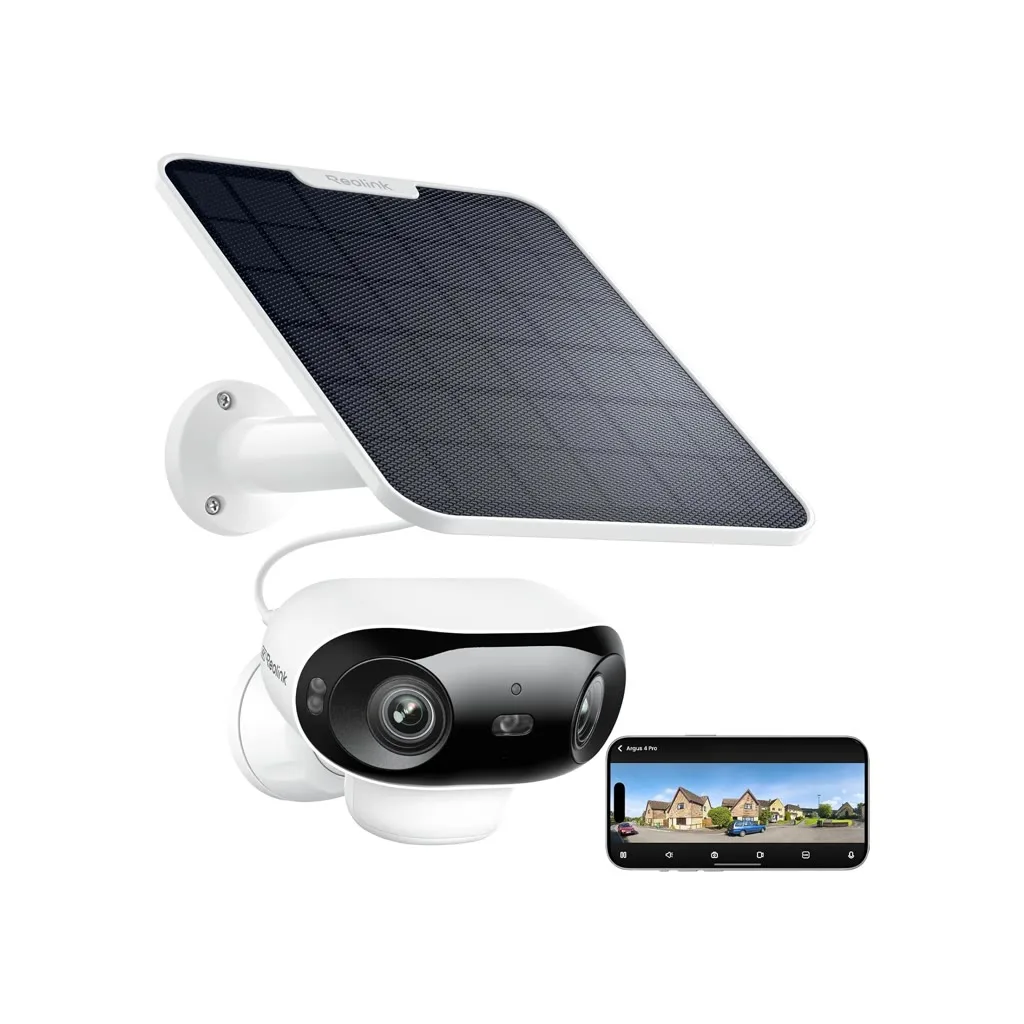
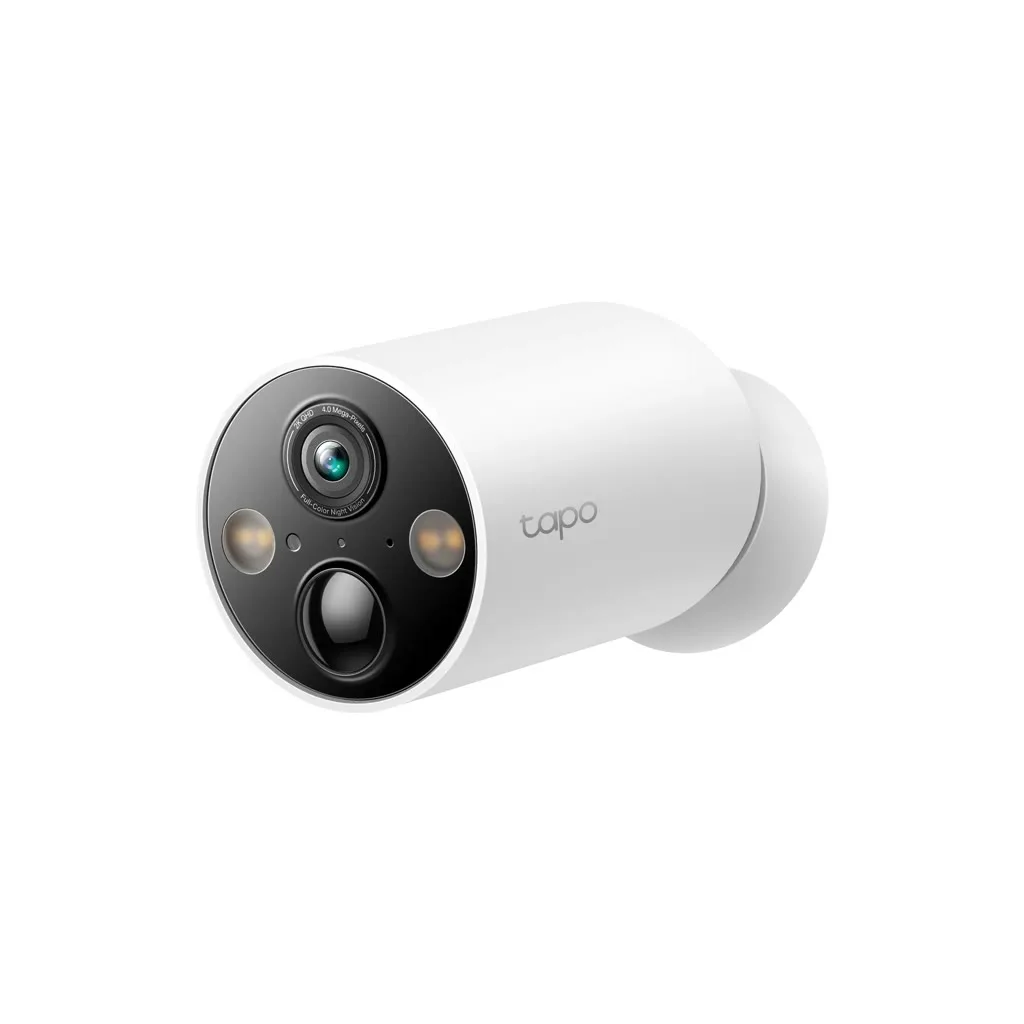
Wire-free magnetic 2K QHD camera with a 150 degree field of view, a 10000 mAh battery rated up to 300 days per charge, color night vision with a starlight sensor and spotlights, and free AI detection for people, pets, and vehicles. It offers 12x digital zoom, a 94 dB siren, two-way audio, microSD storage up to 512 GB, and IP66 weather resistance.
First dual-network rechargeable tracker: USB-C rechargeable with about 12 months per charge (90-minute charge), Apple Find My OR Google Find Hub, plus a loud siren, LED strobe and an Alert safety mode for live-location sharing. Connectivity & power: Bluetooth; USB-C rechargeable, about 12 months per charge; IPX6 Traction: Engadget and The Verge best Bluetooth trackers 2025; first dual-network rechargeable tracker; listed by Chipolo's own comparison at USD 34.99