Why the Android Find Hub Wave Matters for B2B Accessory Buyers
For four years, retail item-tracker shelf space tilted heavily toward Apple Find My accessories while Android users lacked an equally dense first-party precision-finding benchmark. With Google opening sales of its USD 29.99 single (USD 100 four-pack) Ultra-Wideband (UWB) Pixel Tag integrated into Android's Find Hub network on 2026-11-11, corporate gift buyers, travel-gear brands, and regional electronics distributors across North and Latin America now face surging demand for Android-native and dual-ecosystem smart tags.
That shift is especially commercially important in Mexico, Brazil, Colombia, Chile, and European Android-majority markets where iOS share sits well below US levels, leaving millions of smartphone owners underserved by Apple-only luggage cards and key-ring trackers.
Network Licensing Reality: Apple MFi vs Google Find Hub
Unlike generic Bluetooth proximity buzzers of a decade ago—which lost contact beyond 15 meters and required sketchy third-party apps—modern crowd-sourced trackers rely on encrypted operating-system beacon networks. Never approve a factory sample without verifying official network licensing:
- Apple Find My Network Accessory Program (MFi): requires an MFi-licensed manufacturer, approved chipset firmware, cryptographic token provisioning, and strict adherence to Apple's accessory specification so the tag pairs natively inside the built-in iOS Find My app with zero third-party app install.
- Google Find Hub / Find My Device Network (Fast Pair): requires Google Fast Pair Model ID registration and certified Find Hub firmware certification. Uncertified tags that force buyers to download a proprietary vendor tracking app suffer severe 1-star marketplace returns and should not be marketed as Android network trackers.
- Single-active-network pairing rule: current dual-system retail SKUs allow a buyer to pair a tag EITHER to Apple Find My OR to Google's Android network during setup (rarely both simultaneously on one coin cell due to double beacon advertising current draw). Product packaging must state 'Works with Apple Find My OR Android Find Hub (choose one at setup)' in plain language.
BLE-Only Crowd Finding vs UWB Precision Ranging
First-party flagship tags use both Bluetooth Low Energy (BLE) for crowd-sourced map location and Ultra-Wideband (UWB) time-of-flight ranging for centimeter-level directional arrows indoors. B2B buyers must weigh BOM cost against channel price ceilings:
- BLE-only licensed tags (typical USD 12 to USD 22 retail single, USD 39 to USD 59 four-pack): rely on Nordic, Telink, Realtek, or Atmosic low-power BLE SoCs plus a 75 dB to 90 dB piezo buzzer. They deliver full global map location and audible ring-to-find at a fraction of UWB hardware cost, achieving 10-to-14-month CR2032 battery life or 5-month rechargeable Li-Po wallet-card life.
- UWB + BLE precision tags (typical USD 25 to USD 35 retail single): add an IEEE 802.15.4z UWB transceiver, directional antenna clearance, and stricter FCC Part 15 Subpart F / ETSI EN 302 065 regulatory testing. Only smartphones equipped with UWB radios (Pro-tier iPhones, flagship Pixel Pro and Galaxy Ultra handsets) unlock directional arrow finding; mid-range Android handsets fall back to BLE audio ringing.
For promotional, luggage, wallet-card, and LATAM mass-retail assortments, certified BLE-only dual-ecosystem tags paired with loud piezo buzzers currently deliver stronger unit margin and broader handset compatibility than private-label UWB designs.
Non-Negotiable Anti-Stalking & Child-Safety Compliance Gates
Item trackers face two strict enforcement regimes in the United States and allied markets that routinely trap unprepared importers:
- Detecting Unwanted Location Trackers (DULT / IETF joint Apple-Google specification): compliant tags must rotate Bluetooth MAC addresses to prevent passive tracking while supporting cross-platform unwanted-tracking alerts, motion-triggered separation chimes after extended travel away from the owner's phone, and serial-number lookup instructions for law enforcement.
- US Reese's Law (16 CFR Part 1263 / ANSI Z535.4) for replaceable coin cells: any key-ring or luggage tracker powered by a replaceable CR2032 lithium coin battery imported into the United States MUST pass UL 4200A mechanical child-resistance testing—requiring either a captive screw tool enclosure or two independent simultaneous motions to open—plus mandatory on-product keep-out-of-reach icons and retail box ingestion warnings. US Customs and Amazon actively delist twist-open coin-cell trackers lacking a UL 4200A Children's Product / General Certificate of Conformity (GCC).
- Rechargeable ultra-thin wallet cards (1.6mm to 2.2mm Qi wireless charging): bypass replaceable coin-cell ingestion latches because the pouch cell is permanently sealed, but require UN38.3 lithium battery transport summaries and Qi receiver thermal cutoffs.
Pre-Order Sample Evaluation Checklist
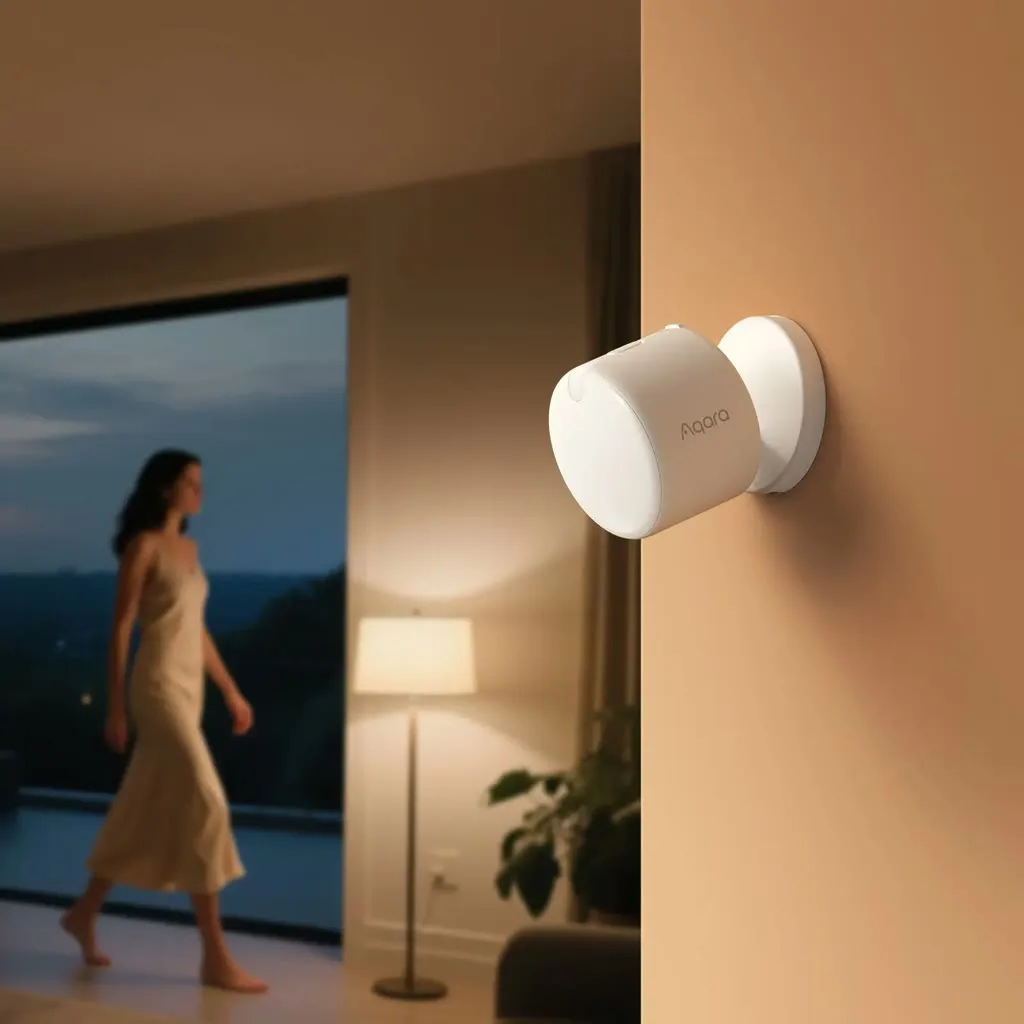
For catalog examples, compare the Motorola Moto Tag 2 for UWB precision finding with the Chipolo POP for BLE crowd finding. The related Aqara FP300 measures presence in a room. For buyers evaluating both product categories, test network recovery on the tags separately from occupancy detection on the sensor. Run these five checks on pre-production tracker samples:
- Verify native OS pairing speed (under 15 seconds via iOS Find My or Android Fast Pair sheet with zero vendor app account creation).
- Measure acoustic sound pressure at 30 centimeters inside a closed leather bag (target 75 dB minimum; muffled 55 dB buzzers drive negative reviews).
- Measure sleep vs advertising microamp current draw on a bench ammeter to confirm advertised 12-month standby claims.
- Drop-test coin-cell housings from 1.5 meters onto concrete five times under UL 4200A rules to confirm the battery door never pops open.
- Audit IP67 or IP68 gasket sealing around the buzzer acoustic membrane.